The Wayg blog
Practical guides to records, stock, staff and money for businesses that sell things — written for owners, not accountants.
No articles match. Try a different search or category.
Books
Books
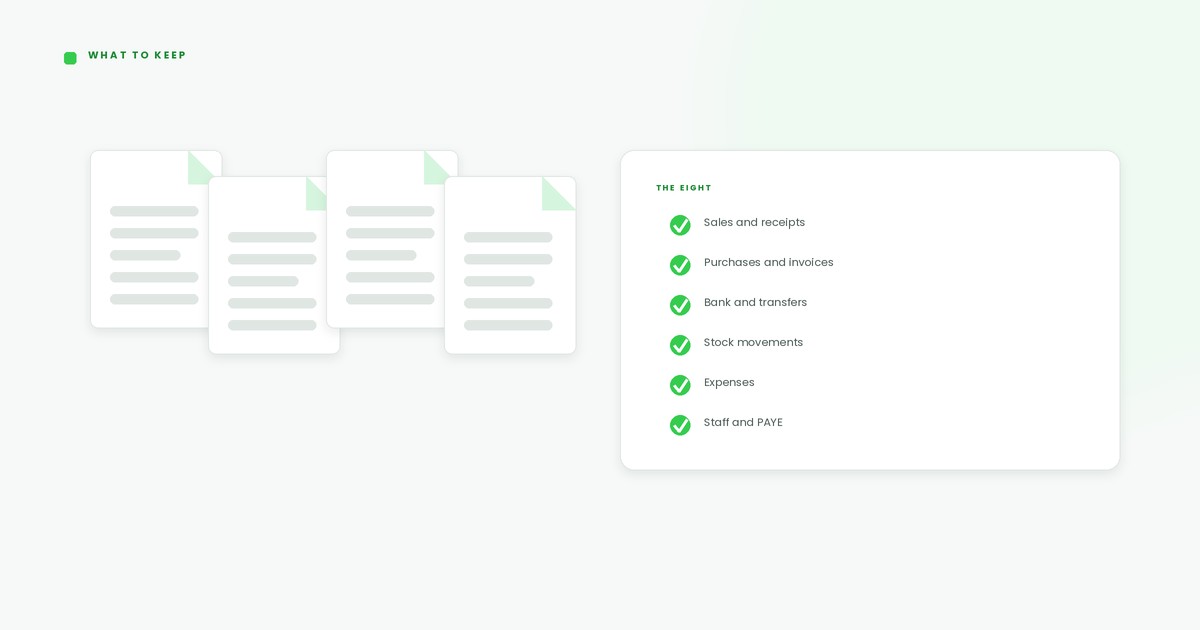
What records a Nigerian business actually has to keep
The eight records a Nigerian shop should be able to produce on demand, and the two numbers that decide whether you are a small company.
Books
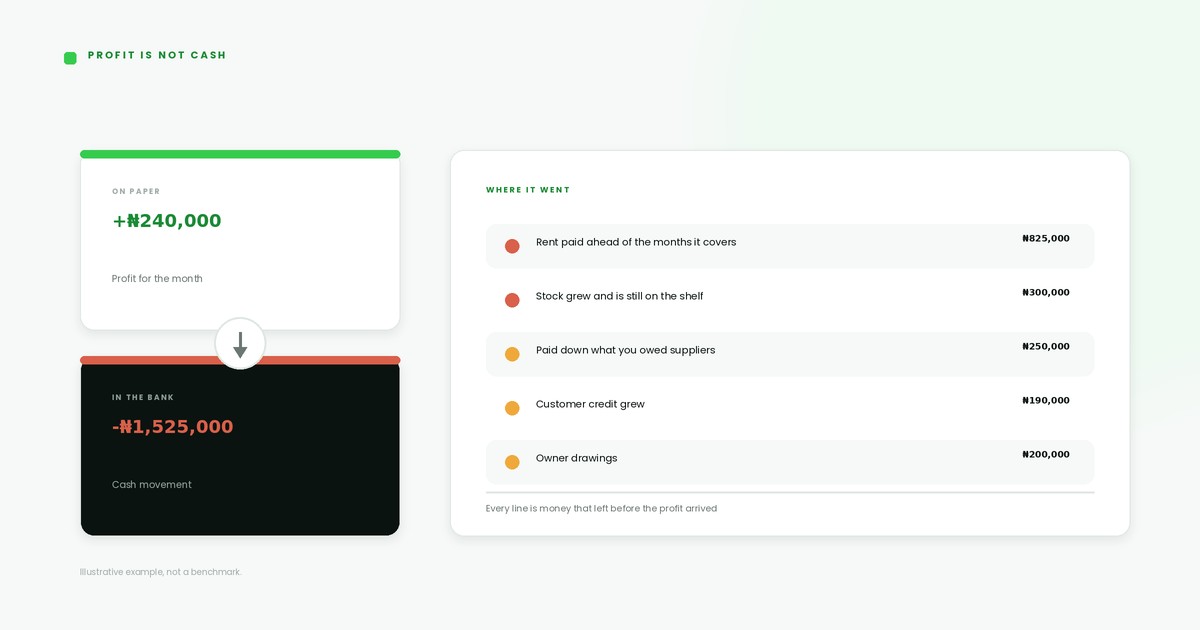
Why a profitable shop still runs out of cash
Your profit and loss says ₦240,000. Your bank says you are ₦125,000 short. Both are right, and the difference has five names.
Books
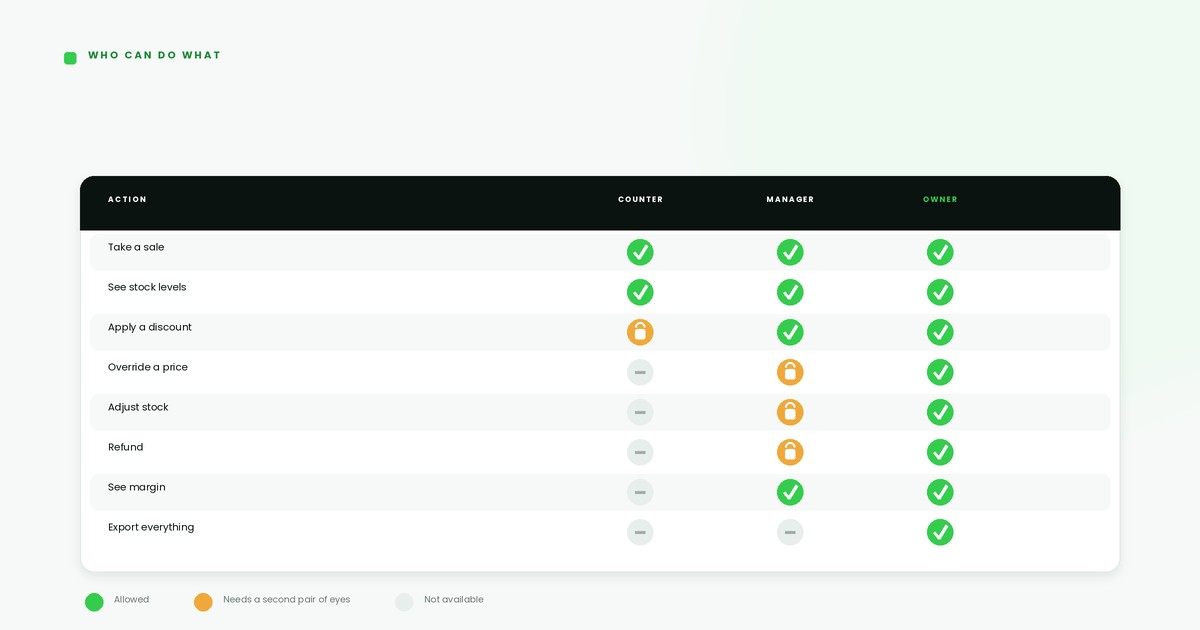
Who should see what: staff access without giving away the shop
Most shops run on one login and one password everyone knows. That is not trust, it is an absence of a record.
Books
How to buy better: suppliers, terms and purchase records
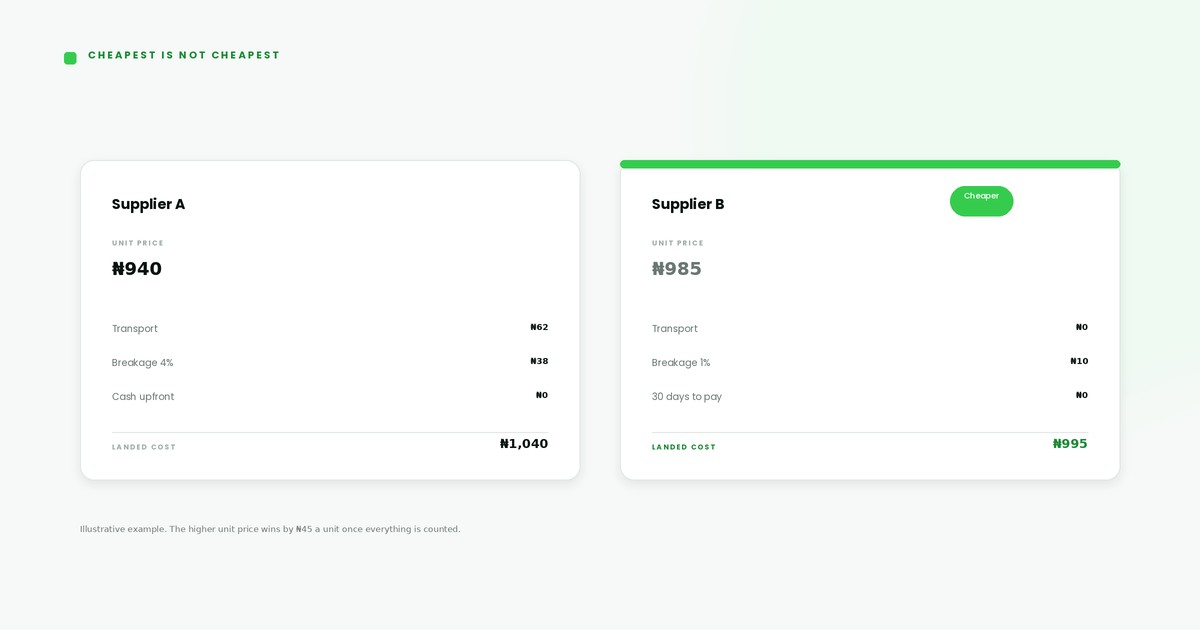
The supplier who quotes ₦4,200 can easily cost you more than the one who quotes ₦4,350. Here is the arithmetic that shows it.
Books
How to close your books every month in under an hour
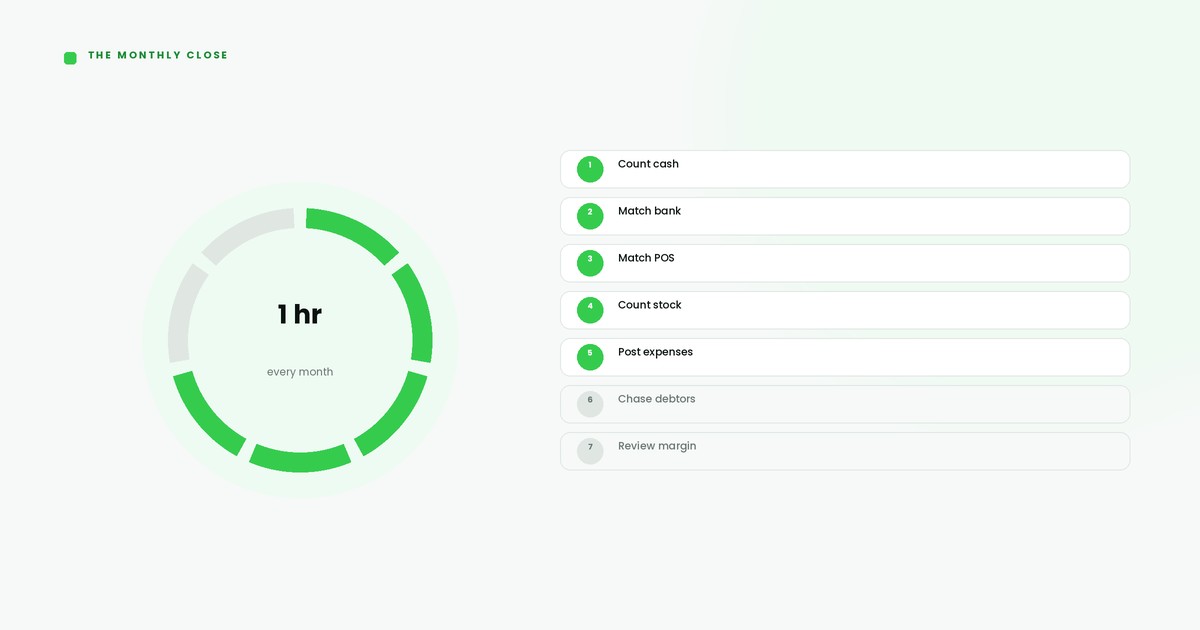
Seven steps, fifty-five minutes, in a fixed order. The order is the whole trick: each step feeds the next.
Books
Pricing so that you actually make money
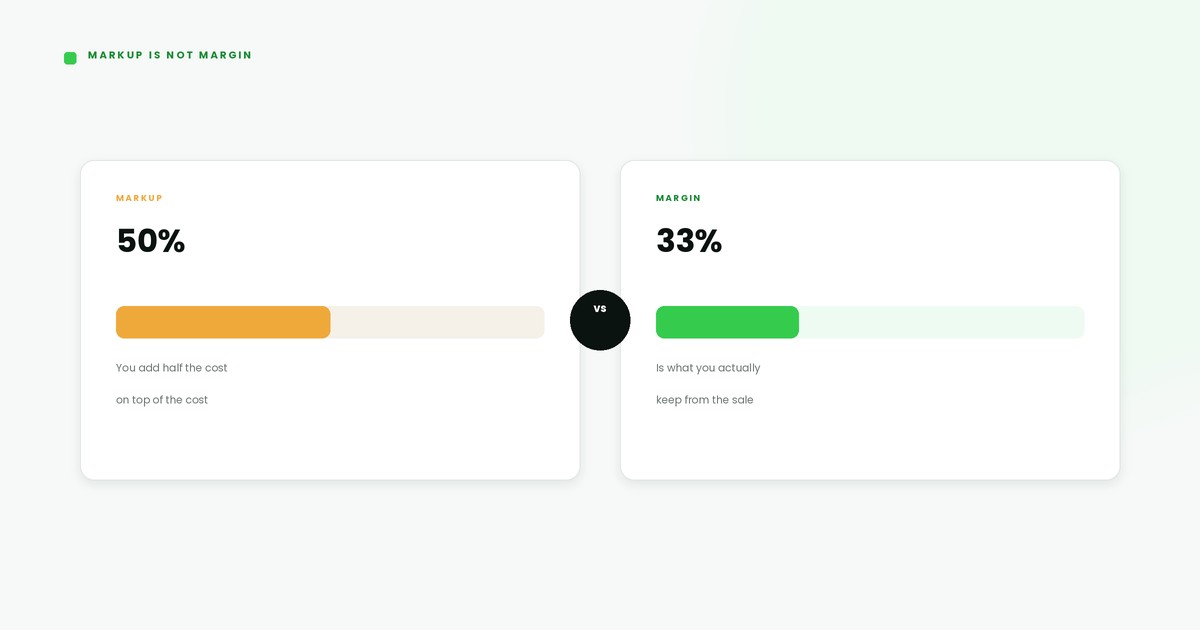
Markup is not margin, and confusing the two is quietly costing Nigerian shops real money. Here is the maths, with a conversion table.
Stock
Stock
Why your stock never matches your records
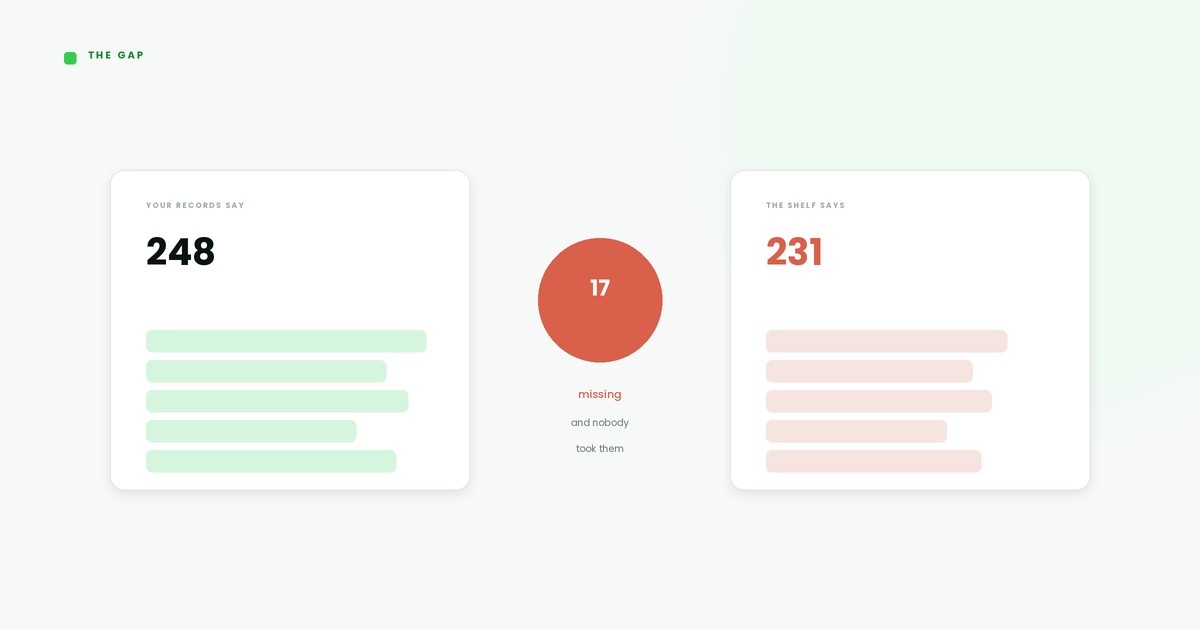
A stock discrepancy is rarely theft alone. Six real causes, and how to detect each one in your own records.
Stock
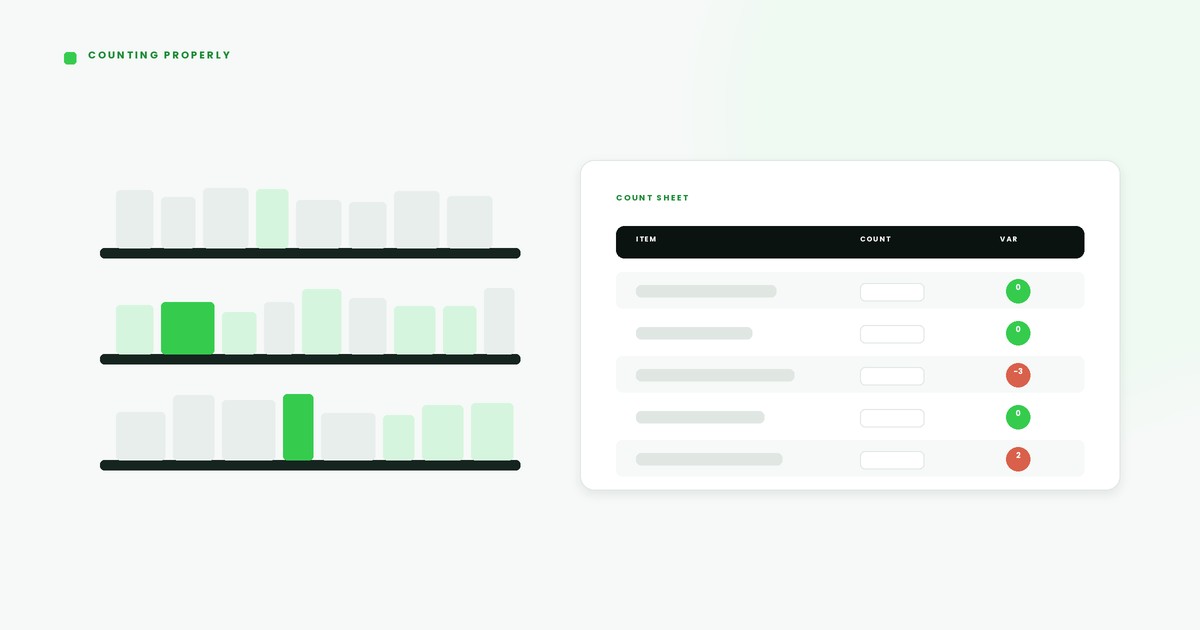
How to run a stock count that balances
Full count or cycle count, why you freeze movement, why the counter must not see the expected number, and what to do with a variance.
Stock
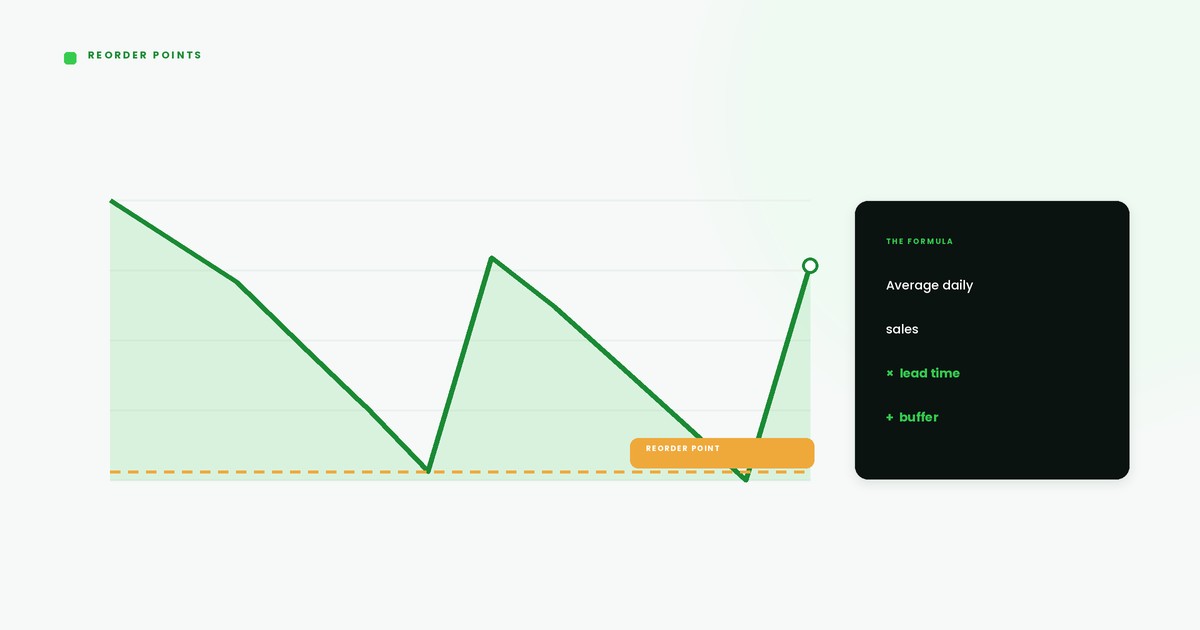
Reorder points without the maths degree
Average daily sales times lead time, plus a buffer. One formula, an honest view of Nigerian lead times, and a worked example.
Stock
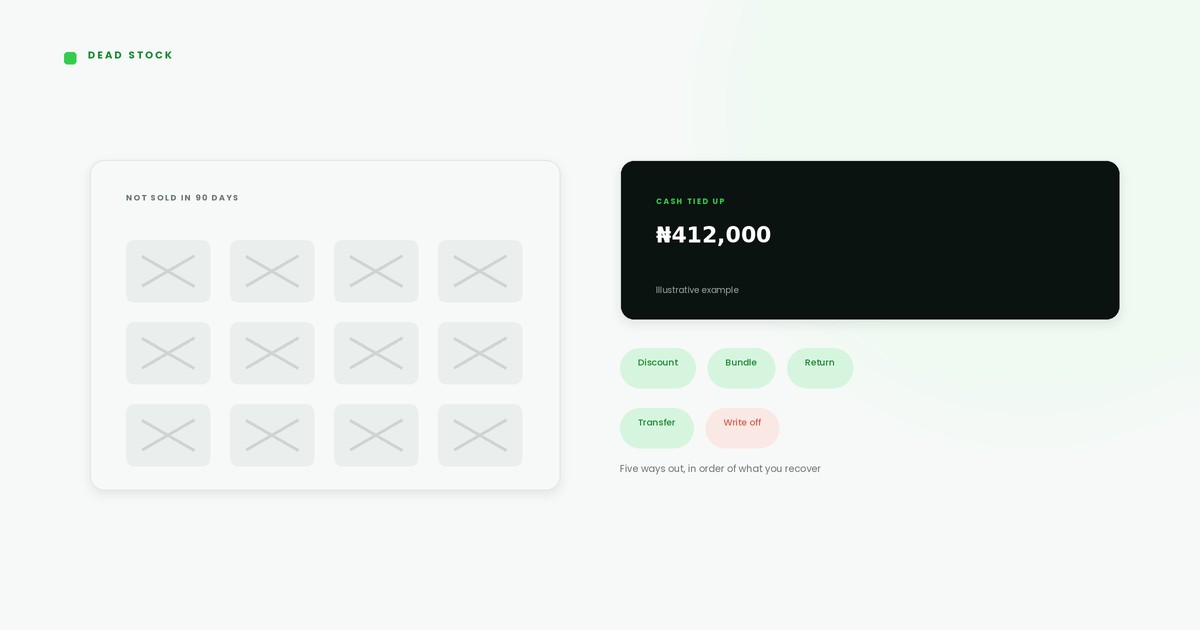
Dead stock: how to spot it and what to do about it
Define dead stock by days since last sale, price what it costs you, then pick one of five exits and take it.
Stock
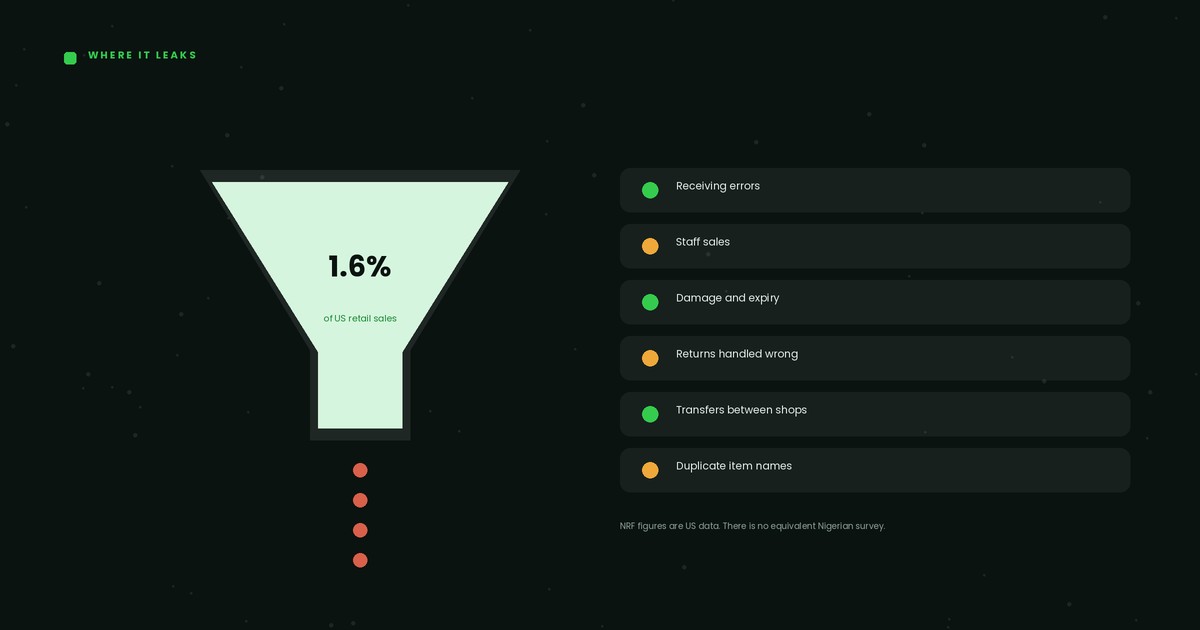
Shrinkage: what it costs and the six places it hides
What shrinkage costs, how to measure your own rate instead of borrowing someone else's, and the six places it hides.
Playbooks
Playbooks
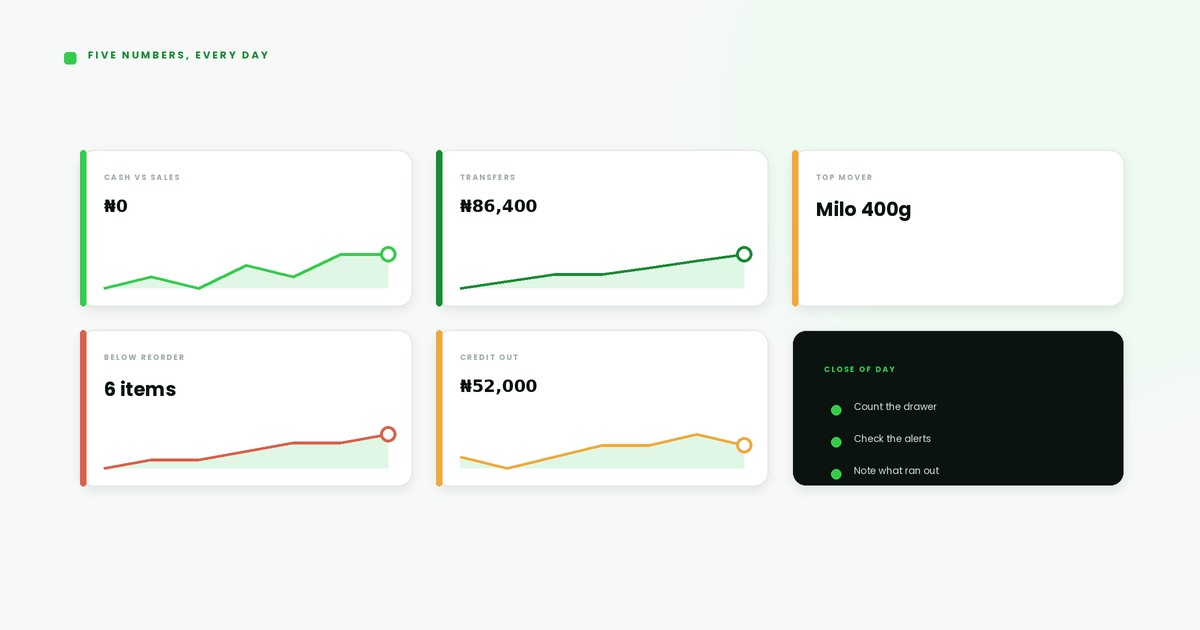
Running a provisions shop: the daily numbers that matter
Five numbers, checked before you lock up, tell you more about your shop than any monthly summary ever will.
Playbooks
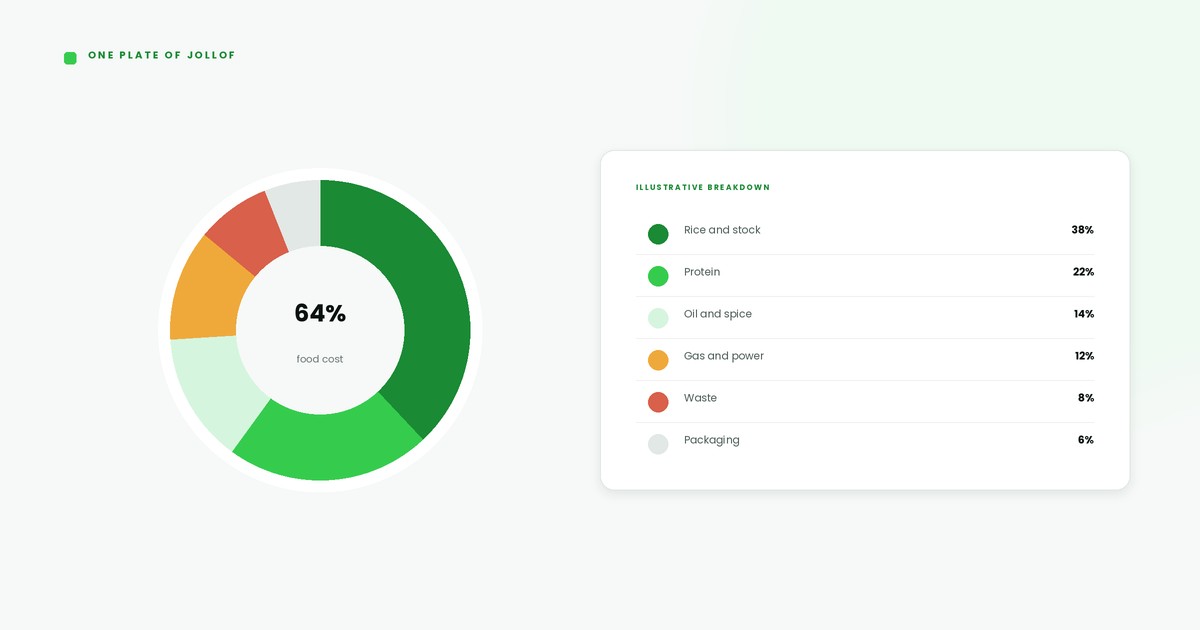
Where a restaurant's margin actually goes
Your kitchen is busy, the queue is out the door, and the money is not there. Here is where it goes.
Playbooks
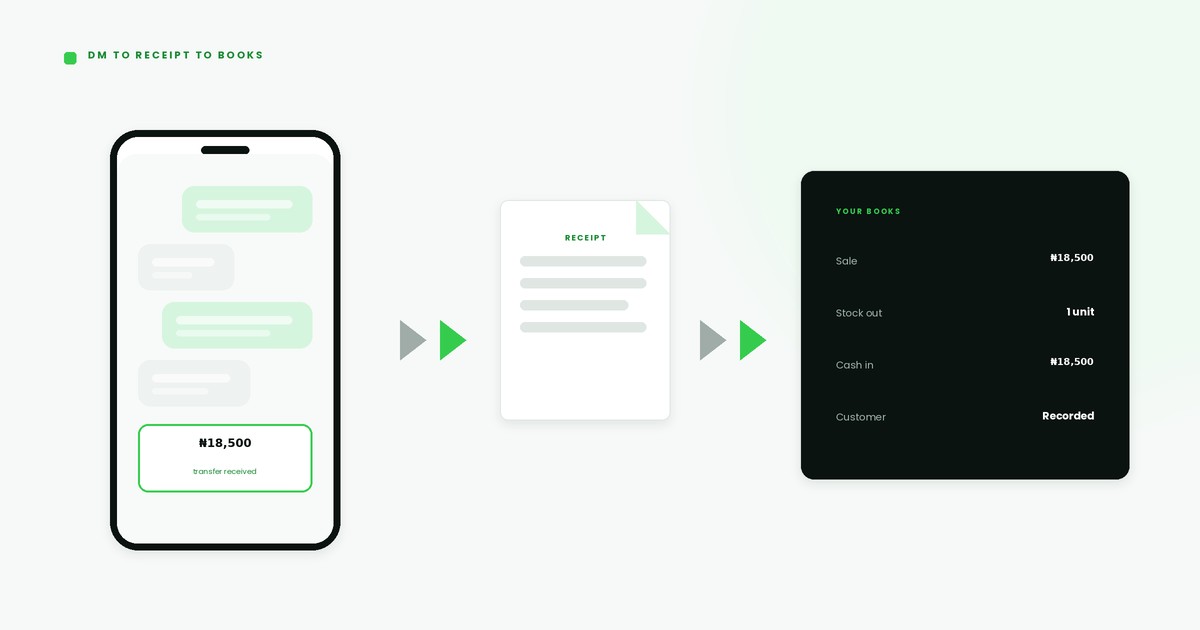
Selling on Instagram: from DM to receipt to books
Forty DMs, nine transfers, six dispatches and a bank statement that agrees with none of them.
Playbooks
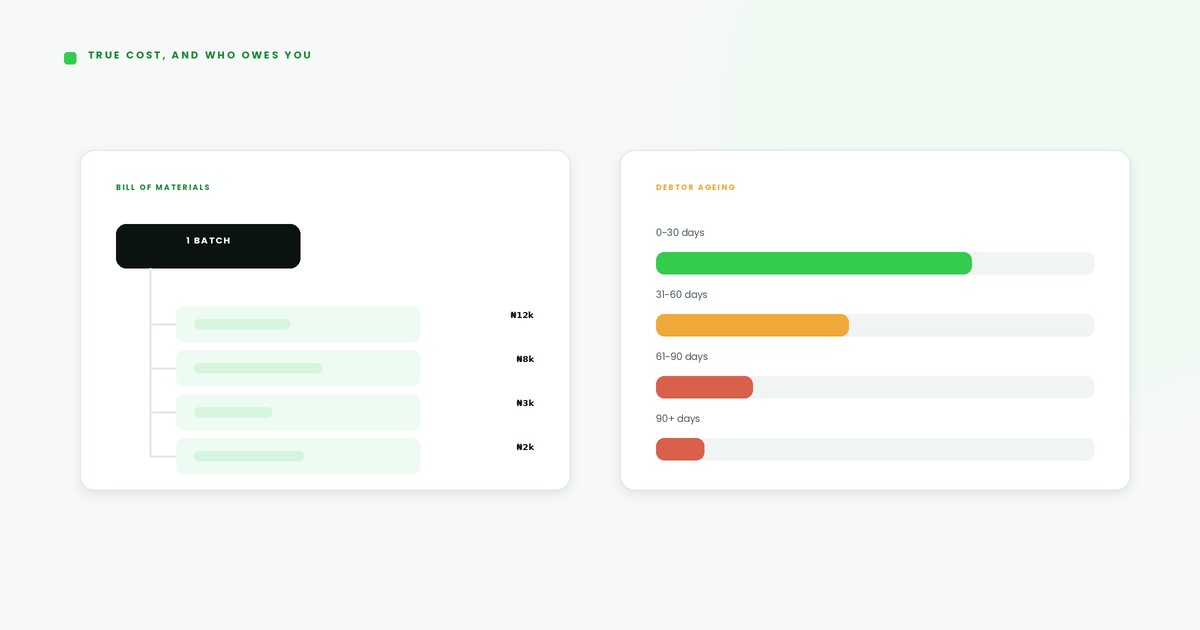
Producers and distributors: true unit cost and the debtor book
One business makes the thing and does not know what it costs. The other sells it on credit and cannot say who owes what.
Playbooks
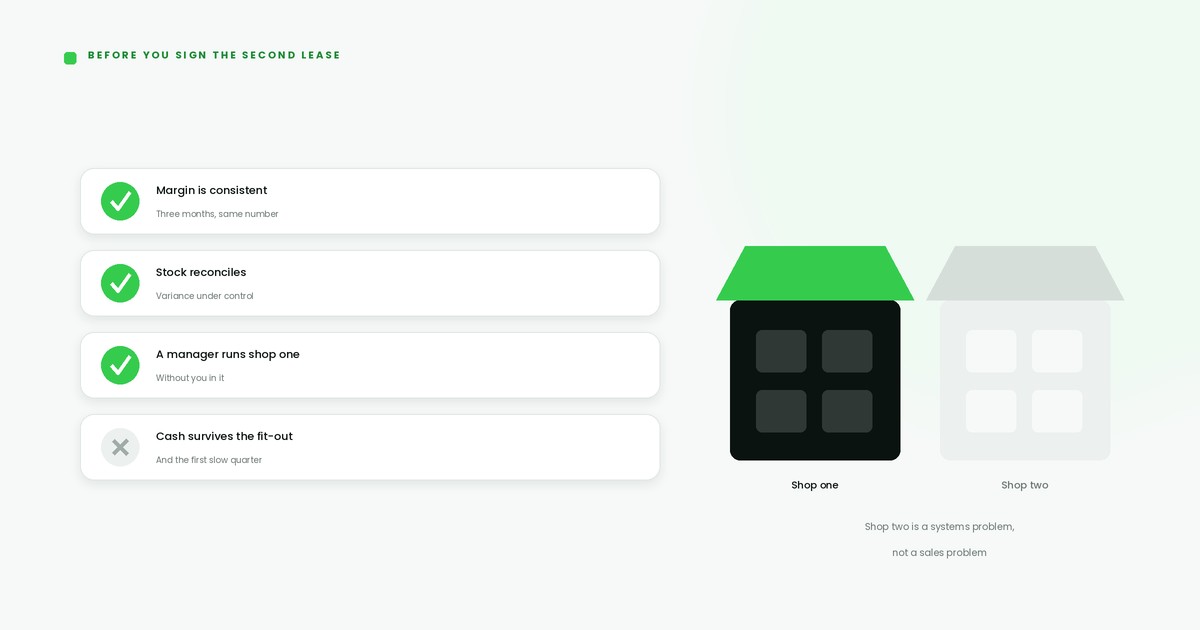
When the numbers say open a second shop
The first shop is a job you are good at. The second one is a system, and most people find that out after signing the lease.
Comparisons
Comparisons
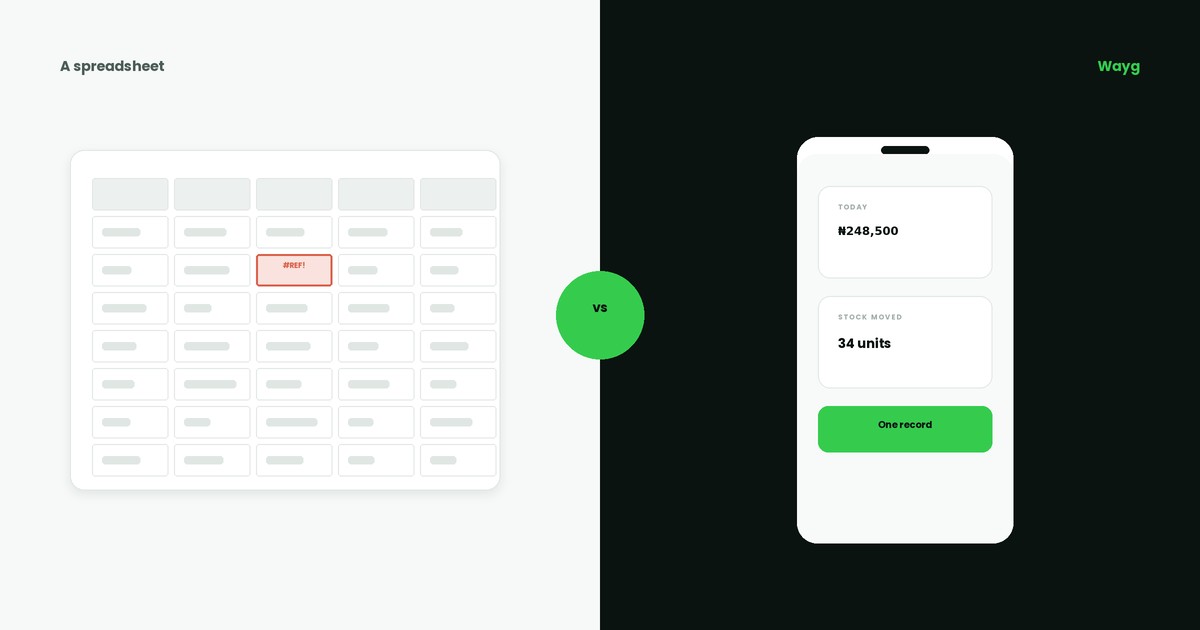
Wayg vs a spreadsheet for running a shop
Spreadsheets are free, flexible and everyone knows them. Here is exactly where they hold up in a shop and where they quietly stop working.
Comparisons
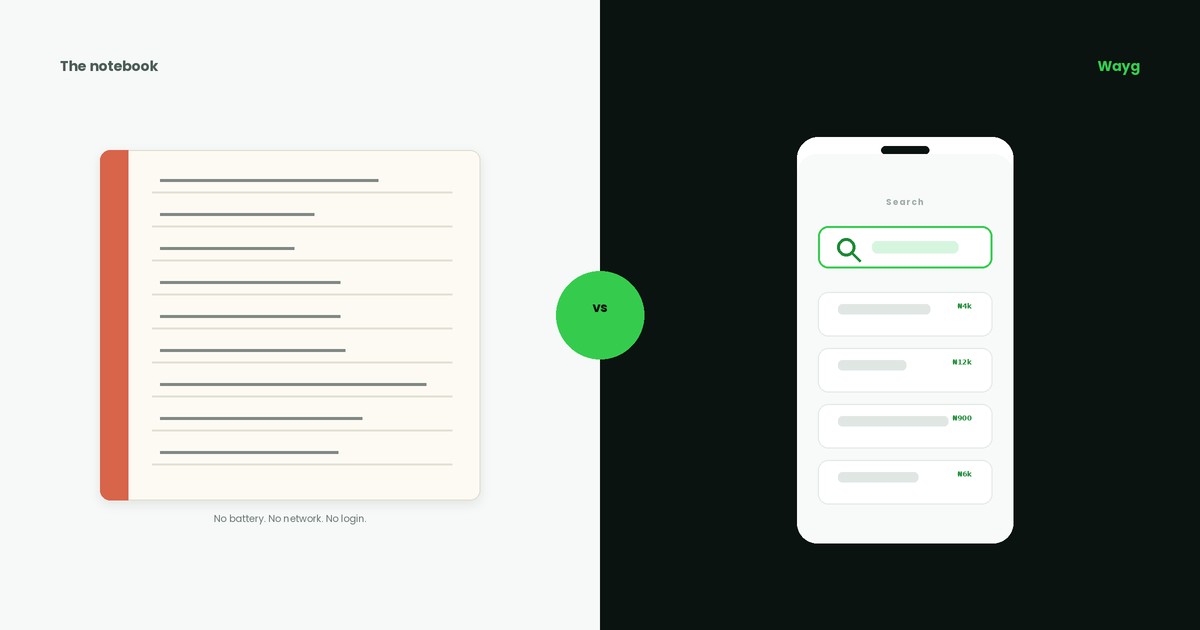
Wayg vs the notebook and calculator
The notebook needs no battery, no network and no password. Here is what it still cannot do, and the honest case for running it alongside software.
Comparisons
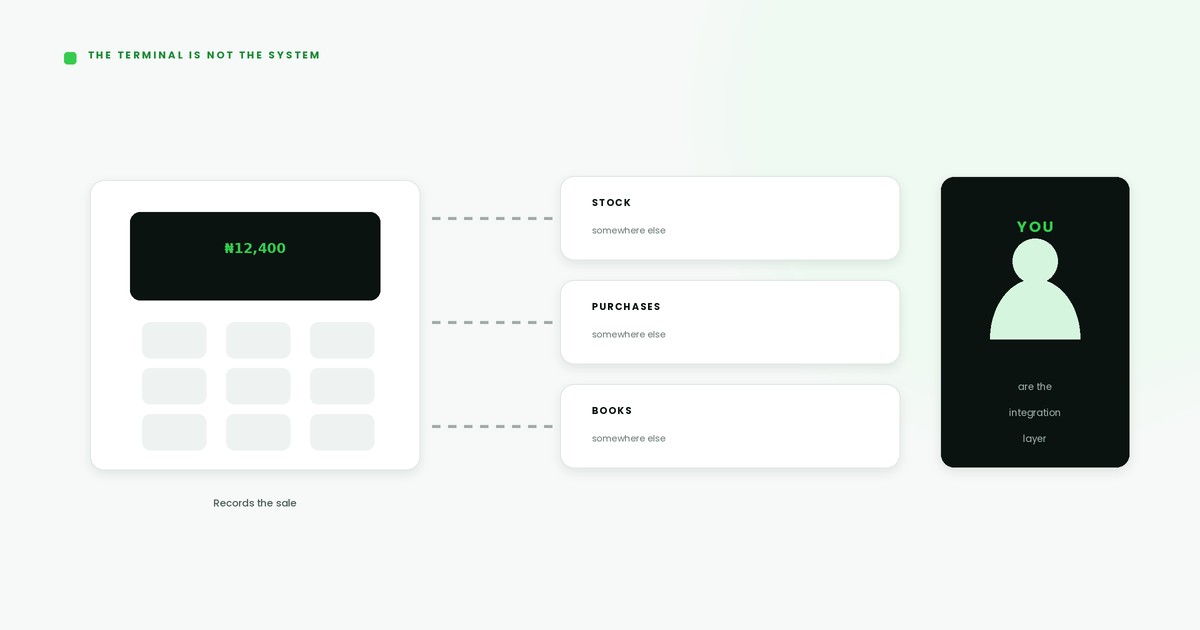
Why a POS on its own still leaves you reconciling
A POS tells you what was sold. It cannot tell you what you had, what you paid for it, or whether the money landed. That work still falls to you.
Comparisons
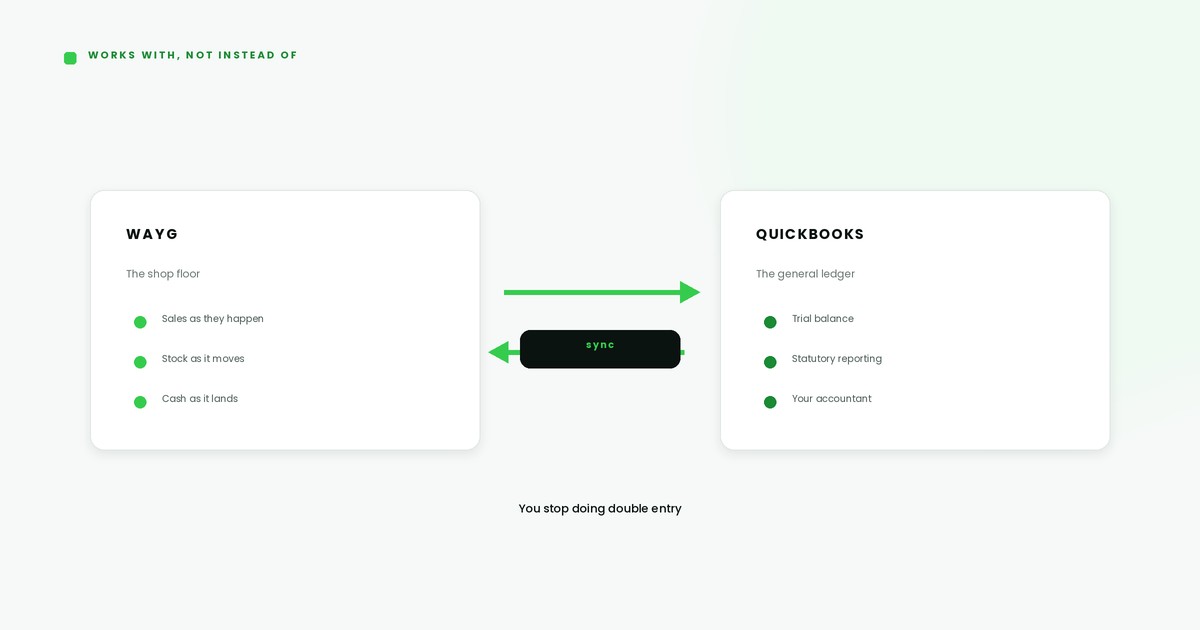
Wayg and QuickBooks: why it is not either/or
QuickBooks is a general ledger. Wayg is where the shop floor happens. The useful question is not which one, but where the join is.
Comparisons
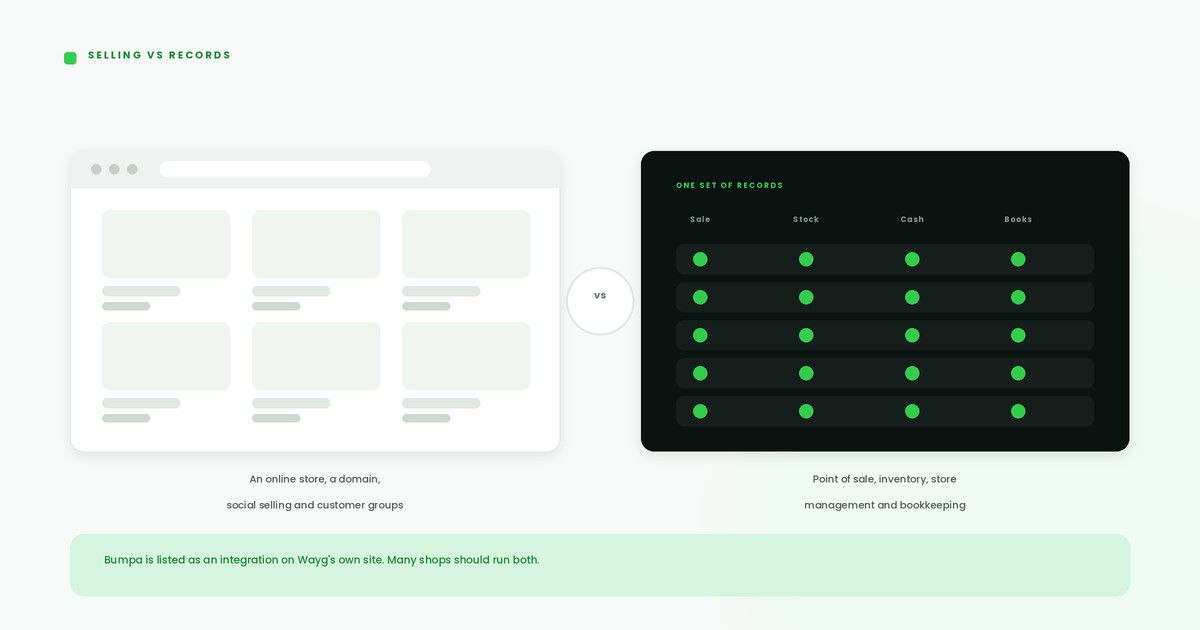
Wayg vs Bumpa: selling online or keeping the records straight
Bumpa is built around selling. Wayg is built around the records agreeing. For many businesses the right answer is both, not one.
Comparisons
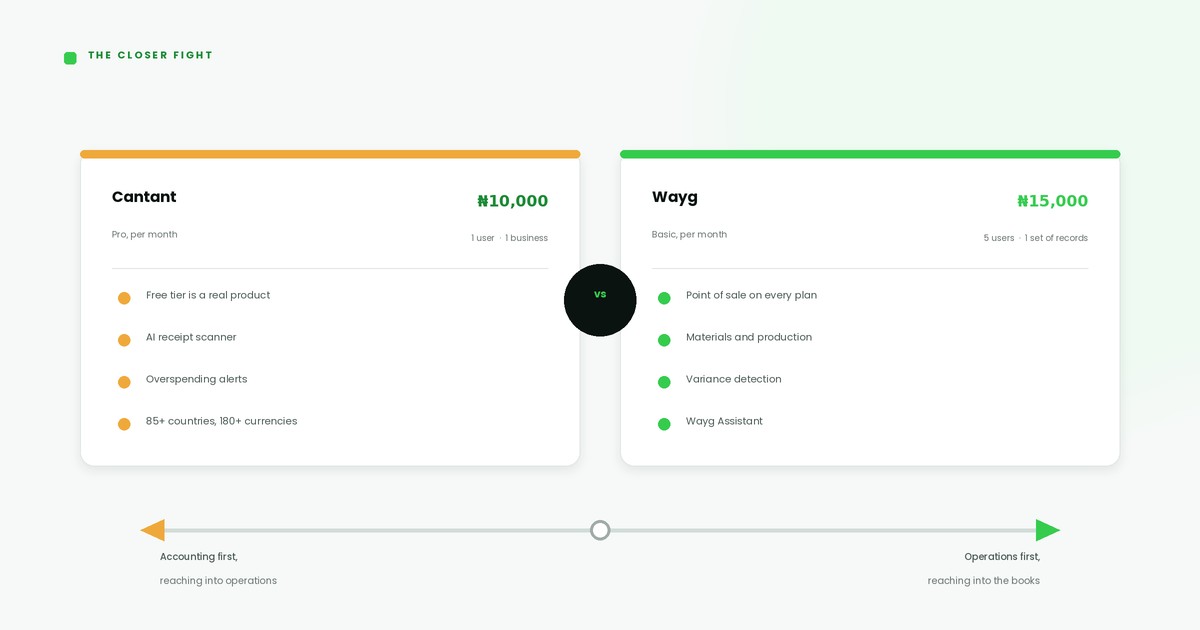
Wayg vs Cantant: two Nigerian ways to keep the books
Both are Nigerian, both do books and stock, both have a free tier, and the prices are close. Here is the line that actually separates them.